
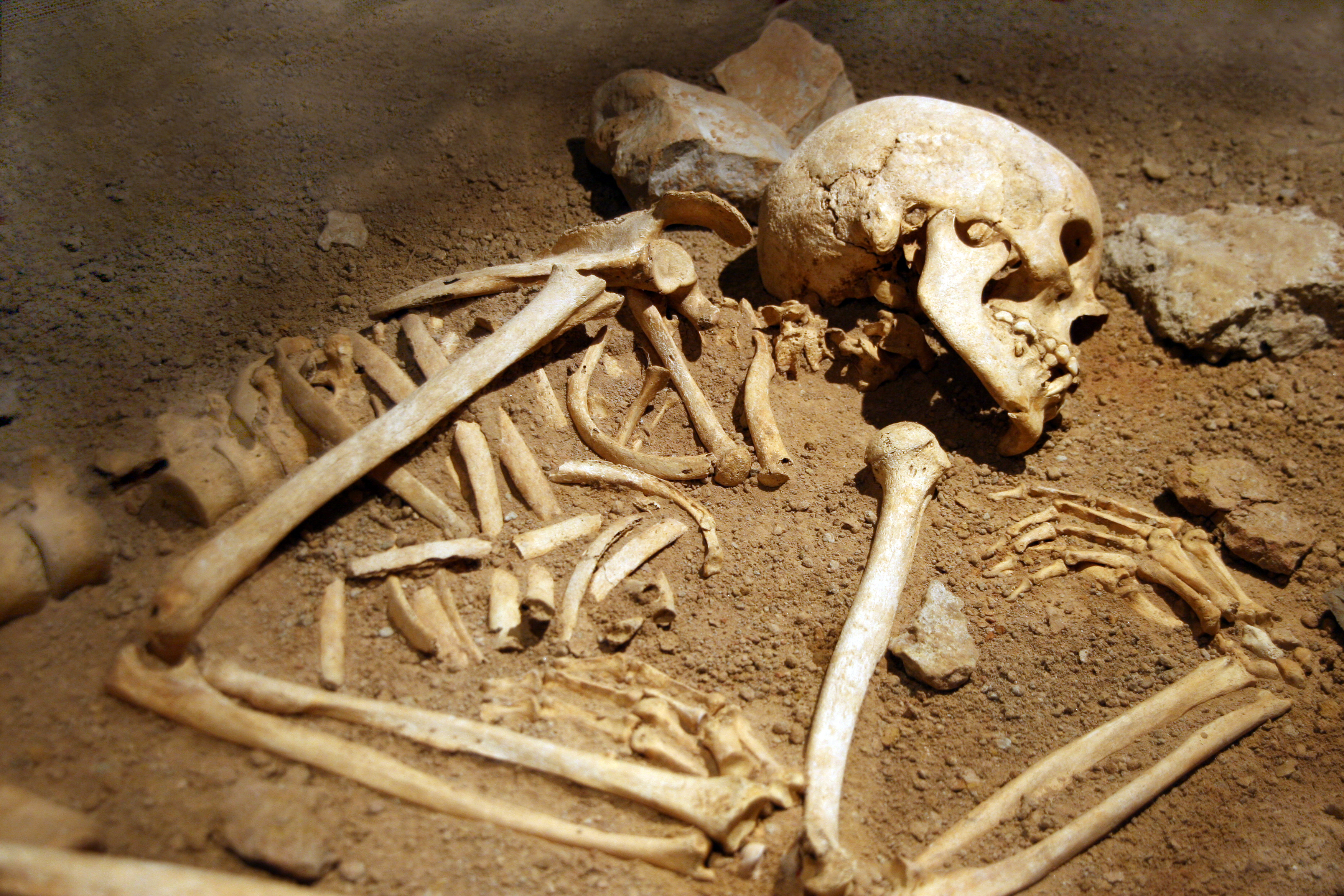


A significant archaeological find has been uncovered in central Poland, where a medieval knight’s remains were discovered underneath a location that used to be a well-known ice cream shop. This surprising discovery has piqued the interest of historians and locals alike, providing a unique insight into the area’s rich history and its ties to feudal Europe.
The uncovering took place amid regular renovation efforts in a town celebrated for its historic buildings and lively market scene. While laborers excavated beneath the edifice, they stumbled upon a stone sarcophagus lying far beneath the contemporary base. Further investigation revealed that the burial site had stayed undisturbed for hundreds of years, safeguarding not only an entire human skeleton but also numerous personal belongings.
Experts who examined the skeleton noted features consistent with those of a high-ranking medieval warrior. The remains appeared to be that of a male, likely between the ages of 40 and 50 at the time of death, whose strong bone structure and signs of healed injuries indicated a life of physical hardship—typical of someone engaged in combat or knightly duties. The position of the skeleton, laid carefully on its back with arms crossed, suggests deliberate and respectful burial, hinting at the man’s elevated status in society.
What stands out about this discovery is its remarkable location. It is situated right below what used to be a lively business—a quaint ice cream parlor well-loved by the community. This contrast between the ancient and the present shows how modern city life frequently overlays layers of historical importance, unseen by the casual observer.
Alongside the skeleton, several relics were uncovered that further confirmed the man’s probable role as a knight. Fragments of what may have been a sword hilt, rusted pieces of chainmail, and remnants of a belt buckle were found close to the body. Though corroded by time, these items are being carefully restored to learn more about the craftsmanship and material culture of the era. Some speculate that the grave may date back to the 14th or 15th century, a period when Poland was frequently engaged in regional conflicts and the knightly class played a vital role in both warfare and politics.
Archaeologists are now working meticulously to document and preserve the site. The process involves scanning the surrounding area with ground-penetrating radar to determine whether other graves or artifacts lie nearby. Preliminary findings suggest this could be part of a forgotten burial ground, possibly associated with a church or military outpost that once stood nearby.
The presence of such a burial beneath a commercial property is not entirely surprising in European towns where development often occurs atop centuries of history. However, complete skeletons in such pristine condition are relatively rare. According to specialists, the grave’s undisturbed state may have been preserved thanks to the consistent construction over the site, which inadvertently protected it from weathering and human interference over the years.
The discovery has reignited local interest in the town’s medieval history. Residents, many of whom were unaware of the area’s deeper historical roots, have expressed both astonishment and pride in the find. Plans are already being discussed to integrate the site into local educational and cultural initiatives. Some suggest creating a small exhibition space in the town center where visitors can learn more about the knight’s life and the time period in which he lived.
Local government officials are working alongside historians to reconstruct the identity of the knight. Although documents from that time are limited and frequently fragmented, initiatives are in progress to scrutinize archival materials, family emblems, and additional genealogical evidence that might reveal a name or ancestry. If these efforts prove fruitful, it could attach a personal narrative to the remains—changing the discovery from an intriguing oddity into a concrete connection to Poland’s medieval history.
The wider consequences of the finding extend past a single person. It acts as a reminder of the constant historical backdrop that supports everyday life in Europe, where history and contemporary life frequently intersect in surprising manners. Furthermore, it highlights the significance of meticulous archaeological methods amid current development, particularly in areas recognized for their historical importance.
In the coming months, the restoration and research teams hope to release more detailed findings about the knight’s origin, lifestyle, and cause of death. DNA analysis may even provide insights into his ancestry, health conditions, or physical traits. Combined with the study of the grave goods and burial style, these investigations could help paint a fuller picture of who this man was and how he fit into the world of medieval Poland.
For now, the former site of a cheerful ice cream parlor has become an active archaeological zone—quiet, meticulous, and filled with curiosity. It stands as a reminder that beneath even the most ordinary spaces, extraordinary stories often lie waiting to be discovered.