

Nuestro sitio web utiliza cookies para mejorar y personalizar su experiencia y para mostrar anuncios (si los hay). Nuestro sitio web también puede incluir cookies de terceros como Google Adsense, Google Analytics o YouTube. Al utilizar el sitio web, usted acepta el uso de cookies. Hemos actualizado nuestra Política de Privacidad. Haga clic en el botón para consultar nuestra Política de Privacidad.

Ciencia y Tecnología

PDF) Alexandrea ad Aegyptum: The legacy of multiculturalism in ...

Hypatia’s Influence on Classical Mathematics

Hypatia of Alexandria, living circa 360 to 415 CE, stands as one of the most remarkable figures in ancient intellectual history. As both a mathematician and philosopher, she played a pivotal role in the preservation, commentary, and advancement of mathematical thought during the late antiquity period. Her achievements transcend simple biographical curiosity; they represent significant contributions to the evolution of mathematics in a time of social, religious, and political transformation.Historical Context and Intellectual EnvironmentUnderstanding Hypatia’s impact necessitates placing her within the scholarly dynamism of Alexandria, a celebrated hub of knowledge and the site of the fabled Library of Alexandria. Being…
Leer más
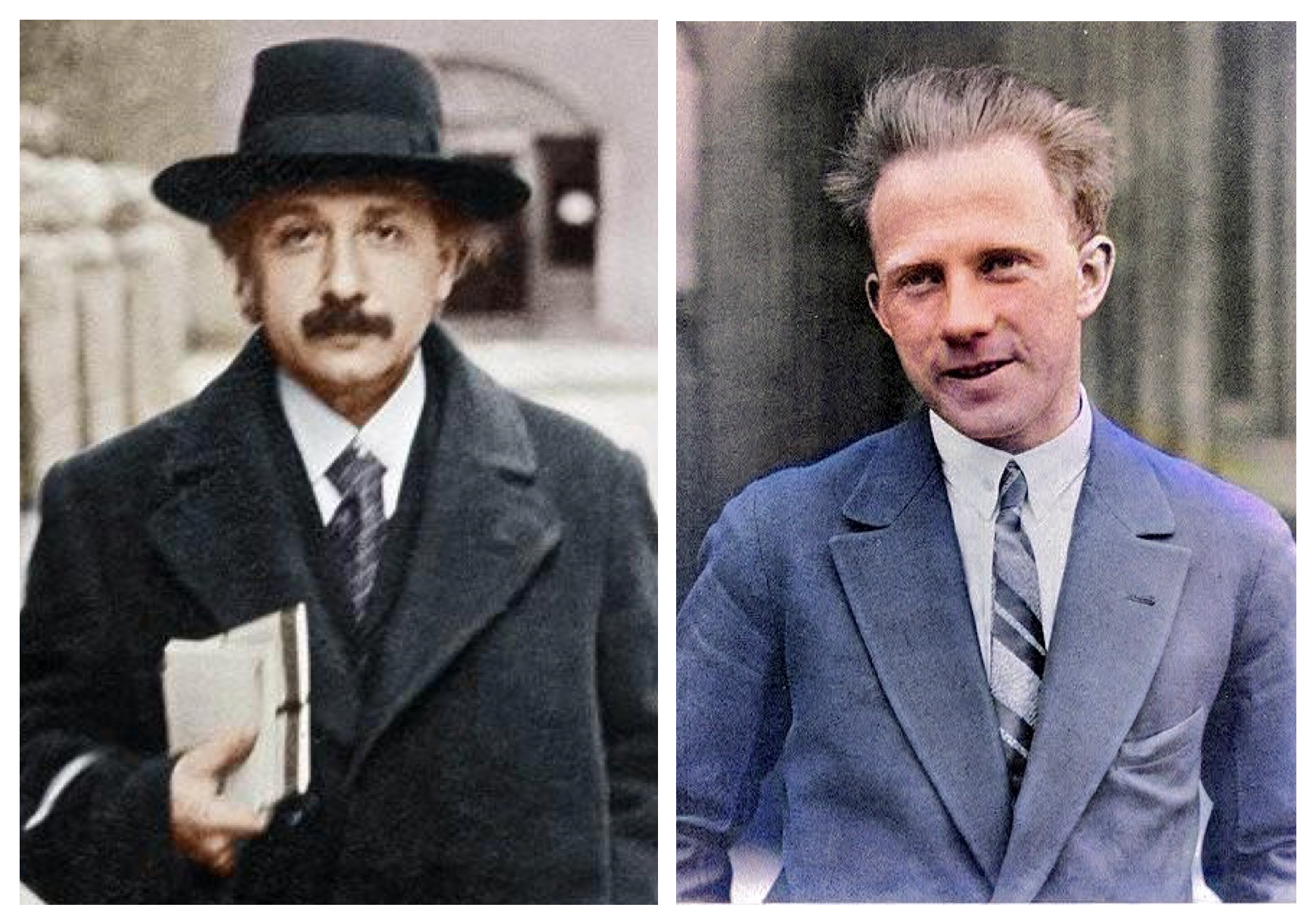
What theories did Werner Heisenberg propose?

What theories did Werner Heisenberg propose?

Werner Heisenberg is considered a pivotal personality in the evolution of modern physics, primarily known for his groundbreaking contributions to quantum mechanics. The concepts he introduced fundamentally transformed the scientific comprehension of atomic and subatomic domains, establishing a theoretical foundation that continues to be essential in current physics. Examining Heisenberg's core theories highlights not only their deep scientific importance but also their enduring philosophical influence.The Uncertainty PrinciplePerhaps the most celebrated of Heisenberg’s contributions is the Uncertainty Principle, formulated in 1927. This principle asserts that there exists a fundamental limit to the precision with which certain pairs of physical properties, known…
Leer más
What did James Clerk Maxwell contribute to electromagnetism?

Exploring Maxwell’s Electromagnetism Theories

James Clerk Maxwell stands as a transformational figure in physics, owing primarily to his monumental work in the field of electromagnetism. The impact of his theoretical and experimental insights has permeated the entire landscape of modern science and technology, fueling advancements from radio waves to the details of quantum field theory. By thoroughly examining his chief contributions, we gain a profound understanding of how Maxwell reshaped the scientific conceptions of electricity and magnetism.The Core Principles: Bringing Together {{Electricity}} and {{Magnetism}}Before Maxwell, electricity and magnetism were primarily studied as separate occurrences, each governed by its own principles. Groundbreaking figures like Michael…
Leer más
https://www.cshl.edu/wp-content/uploads/2020/03/McClintock-on-the-water-.jpg

Major genetics findings by Barbara McClintock

Barbara McClintock was an American scientist whose pioneering work reshaped the field of genetics. Her research not only introduced fundamental genetic mechanisms but also expanded the scientific understanding of genome dynamics. McClintock’s achievements are especially significant given the era in which she worked, when genetics was still an emerging discipline and scientific opportunities for women were limited.Genetics prior to McClintockPrior to McClintock, the scientific community generally believed that genes had fixed positions on chromosomes. The concept of genomic stability had not yet been seriously questioned. Discoveries by Gregor Mendel, Thomas Hunt Morgan, and Charles Darwin provided a framework of inheritance,…
Leer más
What did Dmitri Mendeleev discover?

Dmitri Mendeleev: His groundbreaking discovery

Dmitri Ivanovich Mendeleev, a chemist from Russia born in 1834, is most renowned for his revolutionary contribution that transformed the principles of chemistry. His breakthrough was not the identification of a single element or compound but the development of a systematic arrangement that permanently altered the scientific method of approaching chemical elements. Mendeleev’s greatest achievement was the establishment of the Periodic Law and the development of the Periodic Table, which organized the known elements by their atomic weights and properties. This innovative scientific model not only illustrated what was understood about chemistry in the 19th century but also forecasted the…
Leer más