
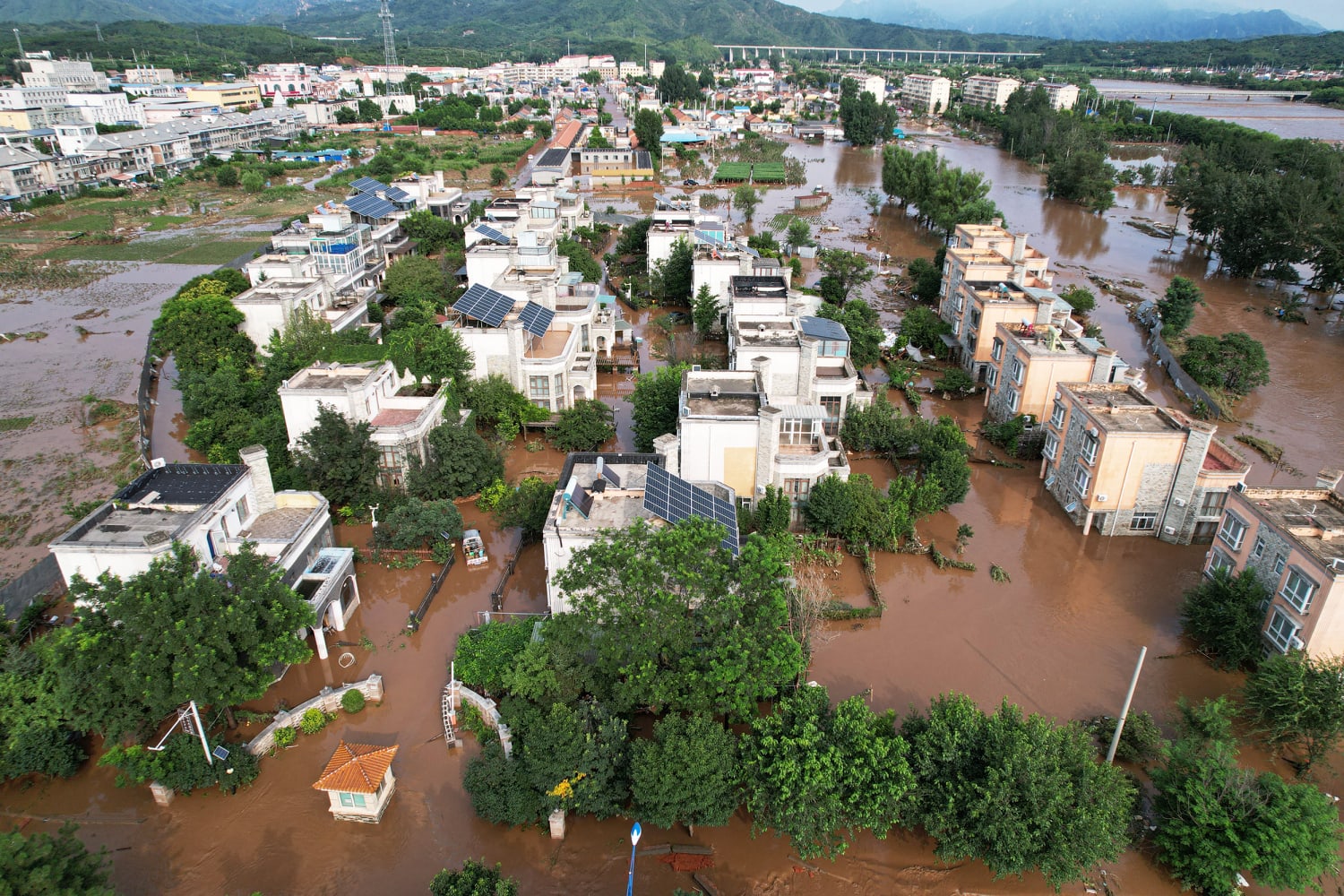


Severe flooding has devastated areas in and around Beijing, leading to significant loss of life and widespread disruption. According to local authorities, at least 38 people have died as a result of the extreme weather, which brought rainfall levels close to what the region typically receives over an entire year. The disaster marks one of the most intense flooding events in recent memory for the Chinese capital and its surrounding provinces.
Initiated by a potent weather system that halted over northern China, the heavy rainfall led to rivers bursting their banks, inundation of communities, and crucial infrastructure collapsing under stress. Streets turned into waterways, metro services were suspended, and emergency teams faced challenges in reaching stranded inhabitants as the waters surged rapidly throughout both city and countryside areas.
The unprecedented rainfall—measured in some areas at nearly 750 millimeters (30 inches) over a few days—has overwhelmed both natural landscapes and urban drainage systems. Meteorologists noted that while summer storms are not uncommon in northern China, the intensity and duration of this event were well outside historical norms. Some monitoring stations reported record-breaking precipitation levels, reinforcing growing concerns about the increased frequency of extreme weather linked to climate change.
Among the hardest-hit areas were suburban districts in western Beijing and parts of neighboring Hebei Province. Many fatalities occurred when homes collapsed or vehicles were swept away by surging waters. Emergency services deployed thousands of responders, including military personnel, to assist in evacuations, deliver aid, and stabilize weakened infrastructure.
In one particularly tragic incident, a group of first responders attempting to evacuate residents was caught in a sudden surge, resulting in multiple casualties. Their sacrifice has been widely recognized as a testament to the dangers faced by those working on the front lines of disaster response.
Thousands of people have been displaced from their homes and are now residing in temporary shelters. The flooding has also disrupted transportation, suspended industrial operations, and damaged crops, raising concerns about the longer-term economic and humanitarian impact. Local governments have pledged financial assistance to affected families, while national agencies have dispatched additional resources to accelerate recovery efforts.
Beijing’s city structure, characterized by a combination of contemporary tall buildings and old, low-rise communities, faced specific difficulties during the flooding. Even with new financial input into the drainage infrastructure, the city’s systems were inadequate to cope with such heavy rainfalls. City planners have recognized the necessity for more robust mechanisms that can withstand severe weather, especially given changing climate trends.
Images from satellites taken before and after the storm illustrate significant alterations in the landscape: highways that were once busy are now calm lakes, and farming areas have transformed into marshlands. Specialists in environmental studies caution that the restoration might require months, particularly in low-lying regions susceptible to flooding, where water diminishes at a slow pace.
Meanwhile, public health officials are monitoring for secondary risks such as waterborne diseases, contamination of drinking water, and the spread of mold in damp buildings. Medical teams have been dispatched to affected areas, equipped with emergency supplies and portable treatment units.
Este desastre ocurre en medio de los esfuerzos más amplios a nivel nacional para mejorar la preparación de China ante desastres y las estrategias de adaptación al clima. En años recientes, varias provincias han sufrido desastres relacionados con el clima, que van desde inundaciones hasta sequías e incendios forestales. Los expertos están pidiendo una planificación más proactiva, que incluya sistemas de alerta temprana, inversión en diseño urbano sostenible y una mejor coordinación entre los gobiernos municipales y provinciales.
The administration has announced a mourning period to honor those who perished and is thoroughly examining ways to enhance emergency response procedures. In a speech made after the catastrophe, officials highlighted the necessity of focusing on public safety and updating vital infrastructure.
Although the current emphasis is on search and rescue operations, there is also a shift towards considering matters of long-term resilience. In what ways can quickly expanding cities such as Beijing adjust to more unpredictable weather patterns? What strategies are necessary to guarantee that new infrastructure can withstand flooding? Moreover, how should communities be informed and prepared for emergency situations?
Esta inundación actúa como un claro recordatorio de la fuerza de la naturaleza y la imperiosa necesidad de ajustar los entornos urbanos para resistir los efectos impredecibles del cambio climático. También destaca la significación de la solidaridad comunitaria y la preparación en momentos de crisis.
Mientras continúan las operaciones de limpieza y el país empieza a evaluar la magnitud completa del desastre, también están surgiendo relatos de supervivencia y heroísmo. Voluntarios, personal médico, vecinos y extraños se han unido para ofrecer comida, refugio y apoyo, demostrando fortaleza ante la tragedia.
The long road to recovery has begun, but for many, the scars left by the flood—both physical and emotional—will endure. In the weeks and months ahead, rebuilding efforts will focus not only on restoring damaged buildings but also on reinforcing the systems needed to prevent future disasters of this scale.
Ultimately, the catastrophic flooding in the Beijing region is more than a weather event; it is a call to action. As communities mourn, rebuild, and adapt, the lessons learned here may help shape a safer and more prepared future.