
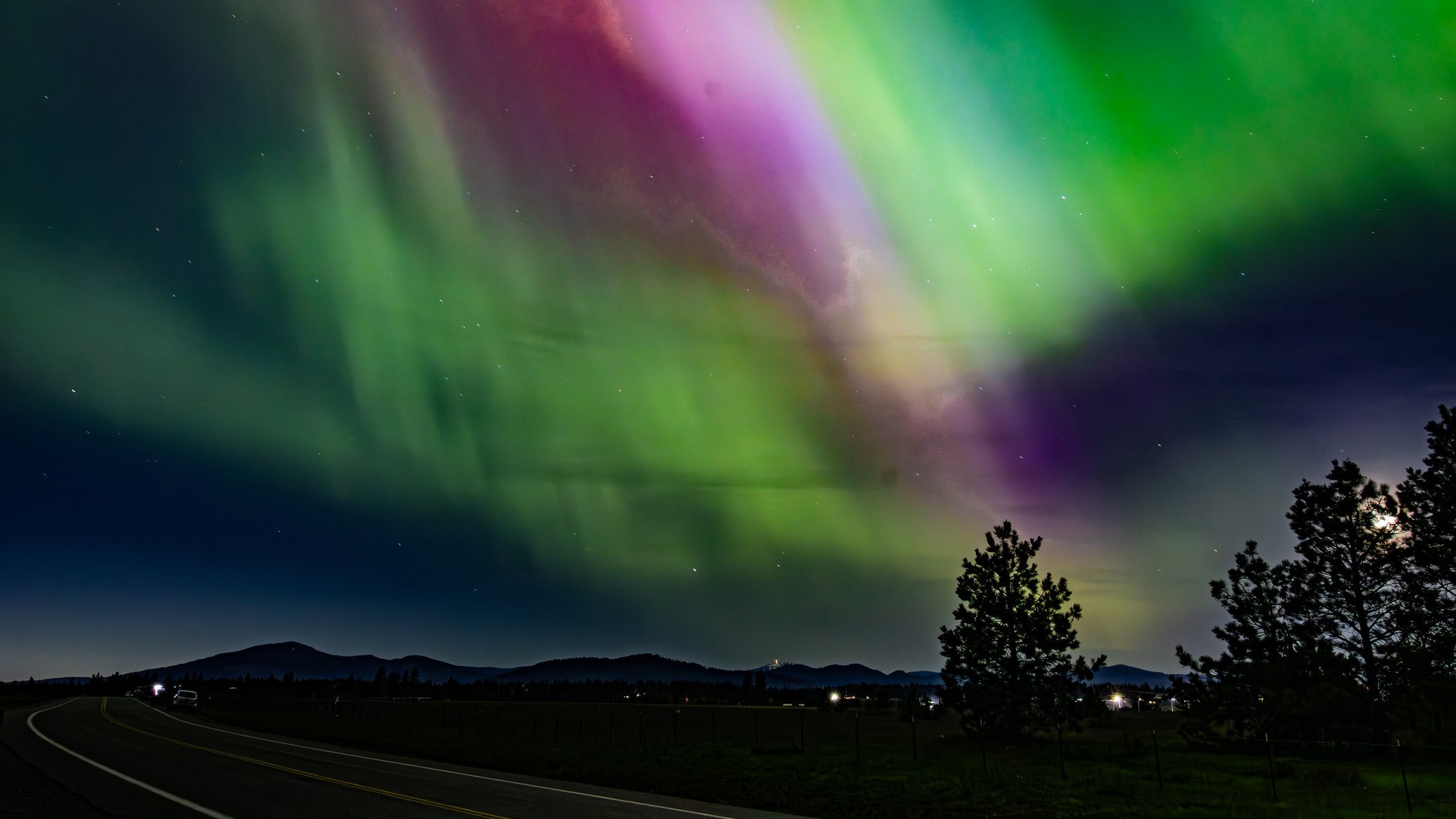


Astronomers and space weather experts are closely monitoring an intense solar storm expected to impact Earth in the coming days. This geomagnetic disturbance has the potential to make the northern lights visible far beyond their typical range, possibly extending deep into the continental United States. Such events, while not entirely rare, are powerful reminders of the Sun’s dynamic activity and its ability to influence life on Earth.
The northern lights, or aurora borealis, usually appear in areas near the Arctic Circle, lighting up skies in regions such as Alaska, Canada, and Scandinavia. However, during periods of heightened solar activity, these mesmerizing displays can be seen much farther south. Current predictions suggest that this storm could allow residents in parts of the central and even southern United States to witness the shimmering green, pink, and purple lights that are typically reserved for polar skies.
This rare visibility is associated with heightened solar activity, particularly a significant discharge of charged particles from the Sun. These particles interact with Earth’s magnetic field, producing the vibrant luminous displays we recognize as auroras. The more intense the solar storm, the closer these lights can move toward the equator. The approaching storm is rated highly on the geomagnetic scale, suggesting a potential for an extensive auroral show if conditions in the sky are clear.
The event’s cause is traced back to a coronal mass ejection (CME), which is an immense release of solar plasma and magnetic fields from the Sun’s surface. When these ejections head toward Earth, they have the potential to disturb both the atmosphere and essential technologies. Historical occurrences have demonstrated that severe geomagnetic storms can disrupt satellite communications, GPS networks, and even electrical infrastructure. Although experts do not expect this specific storm to cause disastrous harm, utility providers and satellite operators have been notified to implement preventive actions.
Experts at the National Oceanic and Atmospheric Administration (NOAA) have issued alerts to both amateur skywatchers and industry professionals. They advise that the peak time for auroral activity will likely occur within 24 to 48 hours of the CME’s arrival. Regions such as the Midwest, the Great Plains, and possibly parts of the southern states like Texas and Oklahoma could be treated to a rare celestial spectacle. For many people, this may be a once-in-a-lifetime opportunity to view the aurora without traveling thousands of miles north.
The best way to experience this phenomenon is to head to an area away from city lights. Urban light pollution significantly reduces the visibility of auroras, so rural regions will provide the clearest views. Observers are encouraged to look toward the northern horizon during nighttime hours, particularly around midnight when the geomagnetic activity tends to peak. Patience will be key, as the displays can vary in intensity and duration depending on atmospheric conditions and the solar wind’s interaction with Earth’s magnetic field.
Auroras are created when electrons and protons from the Sun collide with oxygen and nitrogen in the atmosphere’s upper layers. These interactions release energy, producing lively hues that illuminate the sky. Green is the predominant color, caused by oxygen molecules located around 60 miles above the Earth, whereas red and violet shades emerge at greater heights. This color display is not just visually stunning but also an intriguing scientific phenomenon showcasing the fragile equilibrium between solar energy and Earth’s magnetic barrier.
Although this occasion is sparking enthusiasm among astronomy enthusiasts, it also highlights the significance of monitoring space weather. Researchers observe solar storms due to their capability to interfere with crucial infrastructure. In 1989, a severe geomagnetic storm led to a nine-hour blackout in Quebec, leaving millions without power. Even though current power networks and technological systems are more robust, the increasing dependence on satellites for communication and navigation renders modern society especially susceptible to space weather.
In addition to power outages, solar storms can endanger astronauts on the International Space Station. High-energy particles can raise radiation levels, leading NASA and other space organizations to implement safety measures during intense occurrences. Airlines operating on polar routes might modify their flight paths to reduce exposure and prevent communication disruptions. These measures demonstrate the interdependence between our technological systems and the Sun’s activity, even though it is almost 93 million miles distant.
For those passionate about photography and stargazing, this storm offers a prime chance to snap stunning pictures of the night sky. Anticipation is building across social media, with people organizing visits to locations with minimal light pollution to record the event. Specialists advise utilizing cameras with manual options and extended exposure times to successfully capture the aurora. Using tripods and wide-angle lenses can aid in creating clear and impressive images of the illuminated skyline. For those who can’t make the trip, live streams and photos shared by the community are expected to spread around online after the storm.
Looking ahead, scientists expect solar activity to continue increasing over the next few years as the Sun approaches the peak of its current solar cycle. This means similar events could become more frequent, though not every solar storm will produce auroras visible so far south. For now, this particular geomagnetic storm stands out as one of the most significant in recent memory, offering both beauty and a reminder of our planet’s vulnerability to solar forces.
As the storm approaches, experts urge the public to remain informed through official channels such as NOAA’s Space Weather Prediction Center. These agencies provide real-time updates on geomagnetic conditions, aurora forecasts, and potential impacts on technology. For those fortunate enough to witness the northern lights during this rare occurrence, it will serve as a stunning example of nature’s power and elegance—a cosmic performance unfolding high above our heads.
From the scientific perspective, solar storms offer valuable insights into the Sun-Earth connection and help researchers refine predictive models. Understanding how these storms form and propagate is crucial for safeguarding infrastructure and planning future space missions. Each event contributes to a growing body of knowledge that ensures society can better prepare for the next major solar outburst.
If conditions align as expected, skies across large portions of the United States could glow with hues of emerald and crimson, captivating millions and reminding humanity of its place in the vast solar system. The spectacle is not merely a visual gift but a moment of unity, drawing people outdoors to share in one of nature’s most extraordinary light shows.